

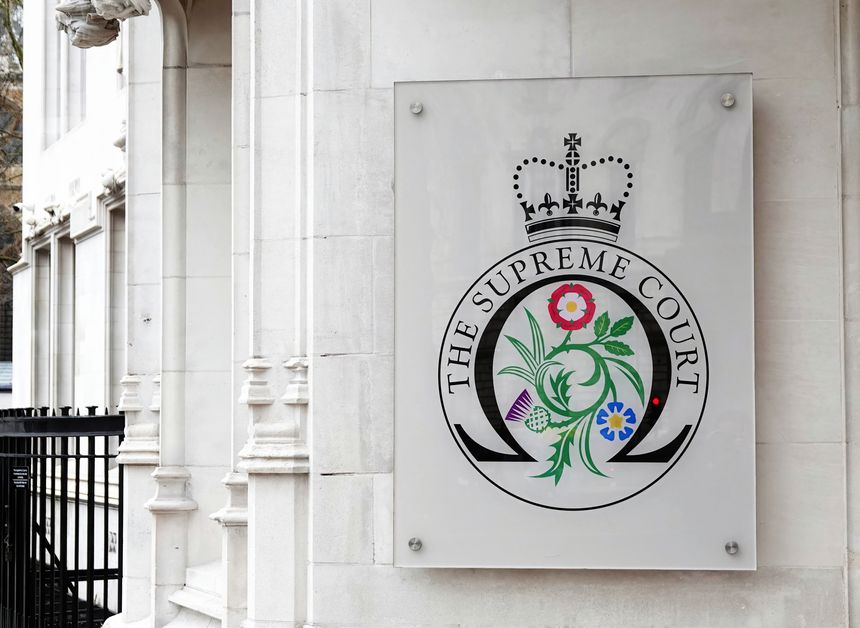
The Supreme Court handed down its much-anticipated judgment today in Providence Building Services Limited v Hexagon Housing Association Limited [2026] UKSC 1. The case concerned a short but important point regarding the correct interpretation of the contractor termination clause used in the JCT 2016 and 2024 standard form of design and build construction contract, a form used throughout the UK. Accordingly, the case has been of significant interest to the construction industry.
In 2023 Hexagon’s interpretation won the day at adjudication and subsequently before Adrian Williamson KC sitting as a Deputy High Court Judge in the TCC. Providence successfully appealed to the Court of Appeal in 2024, following which Hexagon appealed to the Supreme Court – receiving permission to appeal in 2024. Earlier today the Supreme Court unanimously found for Hexagon finding that the Court of Appeal had adopted the wrong approach when seeking to interpret the meaning of the contractor termination clause.
Background
Hexagon was the employer under the 2016 form of JCT Design and Build Contract (“the Contract”) and Providence was the contractor, tasked with designing and building a number of apartment blocks for the contract sum of circa £7.2 million.
In relation to interim payment application 28, the final date for payment of the sum due was 15 December 2022. Hexagon did not make payment by that date. Subsequently, on 16 December 2022, Providence issued a notice of specified default on the grounds that Hexagon had failed to pay the amount due by the final date for payment.
Pursuant to clause 8.9.3 of the Contract, Hexagon then had 28 days (amended from the standard 14 days) in which to ‘cure’ the default or face possible termination under clause 8.9.3. It paid the sum well within the cure period, so Providence never obtained the right to bring its employment to an end under clause 8.9.3.
Fast forward to May 2023 and interim payment application 33 when Hexagon did not make payment by the final date for payment. The very next day after payment should have been made, Providence purported to immediately terminate its employment without further warning by relying on clause 8.9.4 of the Contract which provides: -
“If the Contractor for any reason does not give the further notice referred to in clause 8.9.3 […] but the Employer repeats a specified default [….] then the Contractor may by notice to the Employer terminate the Contractor’s employment…”
Hexagon challenged the lawfulness of the termination. Its position was that to terminate under clause 8.9.4, Providence must first have accrued a right to terminate under clause 8.9.3 (which didn’t happen because Hexagon paid well within the cure period). In contrast Providence said that to terminate under 8.9.4, it didn’t need to have accrued a prior right to terminate under 8.9.3 because the words “for any reason” included a situation where a right to terminate had never arisen under clause 8.9.3. On its case, all that was needed was a repeat of a specified default – in this case not paying by the final date for payment on any two occasions, so long as the first default had been specified under 8.9.1.
The issue between the parties boiled down to this: in order to terminate lawfully under clause 8.9.4 did the Contractor first have to have accrued a right to terminate under clause 8.9.3 (which it chose not to exercise), or was it sufficient that the Contractor had notified an earlier specified default of the same kind?
Supreme Court’s Interpretation
In finding for Hexagon, Lord Burrows described clause 8.9.4 as being “parasitic” on clause 8.9.3, such that it was clear the right to terminate must first have accrued under clause 8.9.3 but not been exercised for whatever reason. This interpretation is, as the Supreme Court described it, objectively and contextually a natural one.
Moreover, agreeing with Hexagon’s submissions, the Supreme Court considered that Providence’s interpretation of the provisions rendered the introductory words of clause 8.9.4 “both otiose and obscure”. That was because if clause 8.9.4 was intended to be independent of clause 8.9.3 (instead of parasitic on that clause) the opening words of 8.9.4 (“if for any reason the contractor does not give the further notice under 8.9.3…”) were unnecessary while those very words were essential if 8.9.4 was to be parasitic on clause 8.9.3.
The Supreme Court considered that the Court of Appeal had erred by focussing on the natural meaning of the three words “for any reason” in isolation and not within the context of clause 8.9 as a whole. The Court of Appeal also erred by assuming that the different words used in clause 8.4.3 (the Employer termination clause which did allow termination without the accrual of a previous right to terminate) must mean the same as the words used in clause 8.9.4. As the Supreme Court explained, if the meaning attributed to clause 8.4.3 and 8.9.4 was to be the same, then the JCT would have used the same wording in both clauses.
In this context, another important feature of the Judgment is that the Supreme Court has expressly held (see paragraphs [36] – [37]) that on the standard wording of 2016 and 2024 Form, the Employer and Contractor termination provisions operate differently. Under the Employer termination provisions at clause 8.4, the cure period under clause 8.4.2 does not have to have elapsed in respect of the original default, before the Employer can terminate on repetition of a specified Contractor default. It will be important for the industry to be aware of this nuance going forwards.
Standard Form Contracts
The Supreme Court confirmed that industry-wide standard form contracts should be interpreted consistently for all contracting parties using that form. Such that, subject to the extent of bespoke amendments, the interpretation is unlikely to be contradicted by the contracting parties’ objective intentions. This judgment adds the JCT standard forms to the list of industry-wide standard form contracts previously considered by the courts.
The established approach, of considering the objection intentions of the contracting parties, remains applicable but when those parties have selected an industry-wide standard form contract, then it can generally be taken that their objective intentions reflect those of the drafters and other users of that form.
The JCT
The JCT suite of contracts is the widest used standard form contract in the construction industry in the UK. Common to a number of contracts across the family and the various versions (i.e. 2016) are the words which were in dispute between the parties. The importance of this judgment is therefore not limited to users of the JCT Design & Build Contract 2016 and will have relevance to a high proportion of construction projects in the UK. Notably, this will include those using the 2024 suite which retained the specific wording.
Any Contractor who terminated under these provisions in reliance on the Court of Appeal’s Judgment or any Employer who was faced with such a termination under these provisions, will need to carefully consider their position.
A full copy of the judgment can be found here and the Supreme Court's press release here.
Mark London and Lena Barnes acted for Hexagon with Jonathan Lewis KC and Nicholas Kaplan of 4 Pump Court as counsel.
/Passle/6491ca5e863f054b458578e8/SearchServiceImages/2026-01-27-10-38-27-535-697895a3812a5c2d3450d260.jpg)
/Passle/6491ca5e863f054b458578e8/MediaLibrary/Images/2026-02-05-09-26-03-435-6984622bae0e4cf738f1e9cf.jpg)
/Passle/6491ca5e863f054b458578e8/SearchServiceImages/2026-02-04-14-23-41-412-6983566dd571d0784502ddba.jpg)
/Passle/6491ca5e863f054b458578e8/SearchServiceImages/2026-01-30-17-30-23-551-697ceaafcf6a75eb080faecb.jpg)