


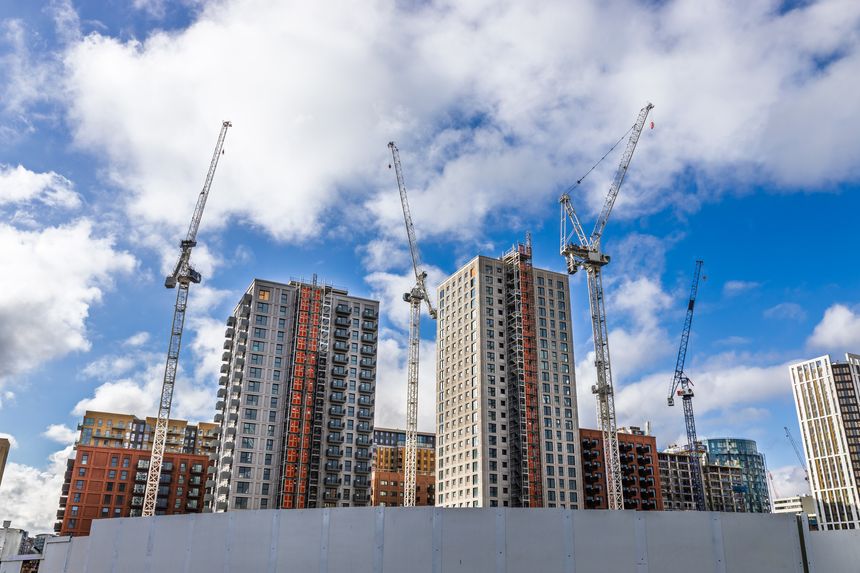
Everyone involved with building work on higher-risk buildings (HRBs) will be acutely aware of the frustration that building control approvals from the Building Safety Regulator (BSR) taking, in some cases, up to a year - significantly longer than the 8 or 12 weeks periods set out in regulation. Delays were of such significance, a cross-party House of Lords inquiry was set up to investigate. That committee's report was published on 11 December 2025.
The purpose of the new regime is clearly essential; embedding safety, competence and accountability into building work was needed following the conclusions of the Grenfell Inquiry, and much of the evidence heard by the committee indicated that the new building safety regime has started this paradigm shift.
However, despite the start of the cultural change, the system that was implemented has not been working as it should. In the first quarter of 2025, decisions on applications for remediation of HRBs took an average of 37.3 weeks. Having known safety defects, but no way to rectify the situation, leaves residents to go ‘through absolute hell’ while waiting for works to start.
Similarly, on new build projects, delays have been causing ‘severe impact’ on viability, with a significant knock-on impact to supply chains.
This evidence led the committee to find the scale of delay as ‘unacceptable’.
The report makes several observations and recommendations:
- That focus should remain on the current system working as intended, with implementation of the single construction regulator being put on hold until such time that the BSR can deliver building control decisions within the statutory timeframes;
- Resource and manpower remains a significant issue; many registered building control approvers left the profession or are only registered in Class 1, so the Government must set out how it intends to ensure a sufficient supply of suitably qualified persons (within the upcoming Construction Skills Action Plan);
- A resounding number of witnesses discussed the lack of clarity on how the BSR assesses compliance at Gateway 2, creating confusion on how compliance is to be evidenced. While more guidance is now available, the BSR must be clearer on its assessment process and continue to work collaboratively with industry to refine its requirements (including publishing case studies);
- Pre-application conversations with the BSR should be made available to building control applicants to assist with applicants' compliance with regulatory requirements;
- The building industry must take steps to contribute to the regime's success. Evidence submitted still shows a large volume of applications failing to include information or failing to demonstrate building regulations compliance;
- Introduction of “account managers” for applicants making numerous applications to assist with consistency of approach and communication;
- An extension of the use of staged application approvals to allow elements of construction to start without the full design being required ahead of Gateway 2;
- A review of what works fall within the BSR's building control supervision, including potential removal of Category B works from their remit - with the BSR welcoming the opportunity to consider what is proportionate for it to control; and
- Increased funding to the BSR is welcomed to allow it the resources to meet demand, but it is yet to be seen if this increase will be enough. While evidence was submitted that an increase in fees could be tolerated, it would be dependent on improved service.
Overall, while the committee was critical of the BSR's past performance, the report was an endorsement of the changes that are currently being put in place. More time will be needed to see the impact of these changes and, undoubtedly, more changes will be needed moving forward - including legislative reform. Devonshires has commented many times that the Gateway 2 system is under significant strain from minor works project applications that could be dealt with elsewhere or by competent persons. This is clearly an unintended consequence - one which will need to be rectified by Parliament.
The report did recommend delaying the planned move to a single construction regulator as it could distract from the immediate issue of BSR performance and the delivery of promised new housing. While it is evidently important to ensure the BSR is running smoothly, we also hope that process doesn’t take precedent over substantial reform.
Construction product regulation reform will impact substantive safety outcomes. After all, securing the safety of people, the performance of buildings and accurate, reliable data about a building's construction are central tenets underpinning building safety reform. With around 66% of construction products being unregulated, a building could be swiftly approved through Gateways 2 and 3 but still be dangerous due to the products used in construction.
At eight and a half years after the Grenfell tragedy, good progress has been made, but for those of us in the race, the finishing line still looks a long way away.
/Passle/6491ca5e863f054b458578e8/MediaLibrary/Images/2026-01-13-12-19-06-927-6966383a966611ff708def11.jpg)
/Passle/6491ca5e863f054b458578e8/SearchServiceImages/2026-01-26-15-36-48-983-69778a1079448d1411bf484e.jpg)
/Passle/6491ca5e863f054b458578e8/SearchServiceImages/2026-01-23-11-47-05-640-69735fb97e5ca2c029092895.jpg)
/Passle/6491ca5e863f054b458578e8/MediaLibrary/Images/2026-01-23-09-18-04-894-69733ccc152dc0613ced2e4f.jpg)